Latest on LinkedIn
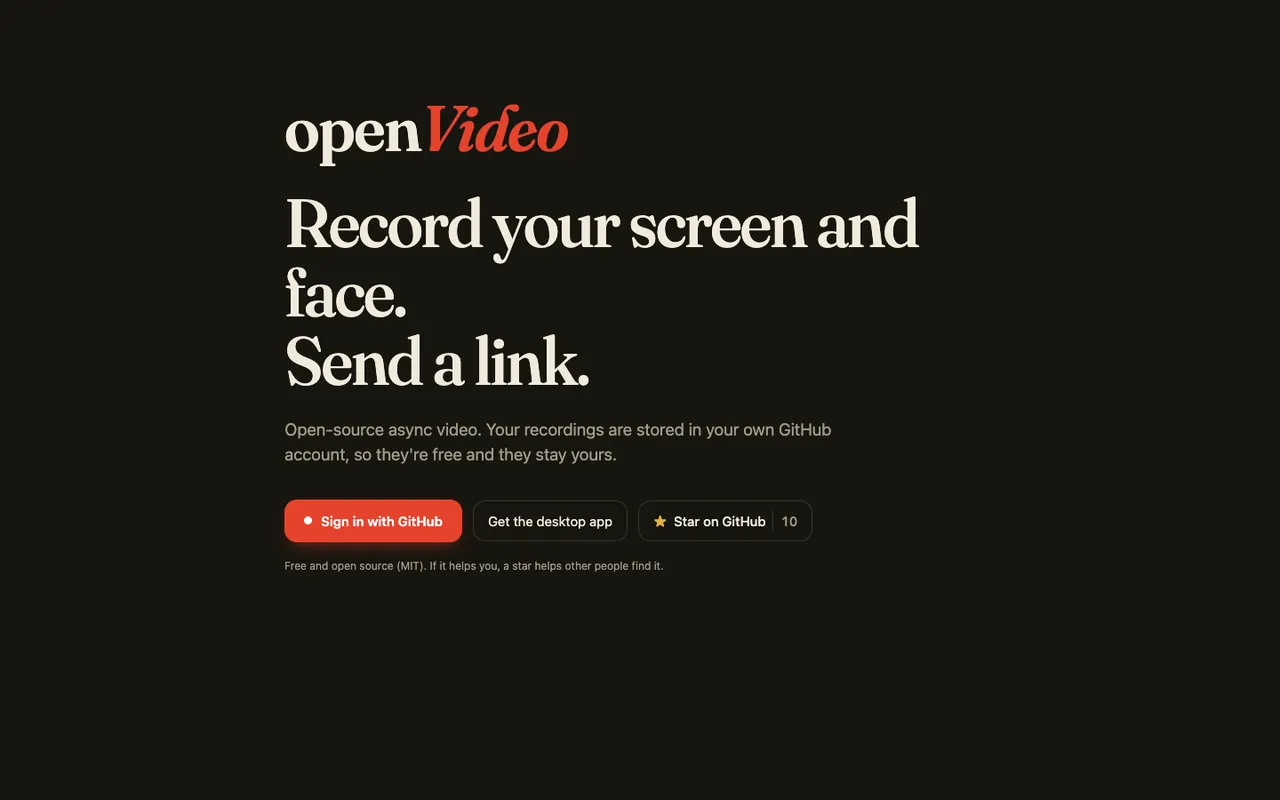
Loom keeps your videos on their servers.
openVideo keeps them in your own GitHub.
That's the idea behind my first desktop app, now out for macOS and Windows. Free and open source.
Before writing any code, I took Loom's desktop app apart to see how it actually records.
Under the Electron UI sits a native Swift/C++ recorder: ScreenCaptureKit for capture, VideoToolbox for hardware H.264, and an HLS muxer that uploads segments to S3 while you're still talking. That's why the link is ready the moment you stop. The app also ships 15 native Node addons for things Electron can't do alone.
I didn't copy that. I made different trade-offs:
👉 No native recorder. Chromium already wraps ScreenCaptureKit on macOS and Windows Graphics Capture behind getDisplayMedia, so one codebase covers both.
👉 Crash-safe writes. MediaRecorder hands me a fragmented MP4 chunk every second and I append it to disk. A crash costs one second, not the whole take.
👉 No video backend. Every share is a GitHub Release in the user's own repo (up to 2 GB per video), and the link encodes owner + tag. No database.
👉 No secrets in the app. Sign-in uses GitHub's device flow, and the token is encrypted with the OS keychain.
The camera bubble is a real window, so the recording captures it. The control bar uses OS content protection, so it never shows up in your video.
The result: no servers, no database, no native daemon. Storage costs $0, for users and for me.
Repo and one-line installer in the first comment.
If you send async videos at work, would you keep them in your own GitHub, or do you need private links?
#OpenSource #Electron #BuildInPublic #Loom
All posts→